
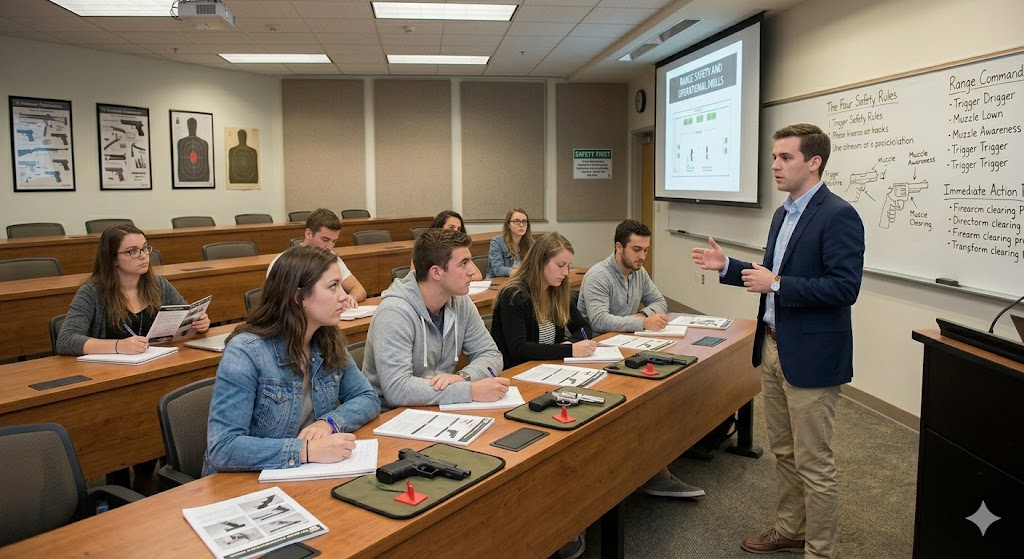
This class fosters a practical understanding of self-defense law, legal responsibility, and the aftermath of a defensive firearm encounter. When a firearm is used in self-defense, the situation does not end when the threat stops. The next phase involves investigation, legal scrutiny, and decisions that can significantly impact your future.
This course is taught by an experienced lawyer with an extensive background in law enforcement and legal instruction, providing practical, real-world insight into how defensive force encounters are evaluated within the criminal justice system.
Most firearms training focuses on what happens during a threat—when to act, how to respond, and how to survive the encounter. However, the reality is that what happens after a defensive incident can be just as consequential. Your freedom, finances, and future may depend on how you understand and respond to the legal process that follows.
A defensive encounter occurs in seconds. The investigation that follows can take months or even years and will be reviewed with the benefit of hindsight by law enforcement, prosecutors, attorneys, and potentially a jury. This course is designed to prepare you for that reality before you ever need it.
Students will learn how to think clearly under pressure, how to protect their legal rights while cooperating with law enforcement, and how to communicate effectively after a defensive incident without unintentionally creating legal risk.
Topics Covered Include:
- The legal foundations of self-defense under Illinois law
- When the use of deadly force is legally justified—and when it is not
- Defense of self, others, and dwelling under Illinois statutes
- The full legal process following a defensive shooting
- Understanding “reasonable belief” and threat assessment under stress
- The role and impact of the 911 call (what to say and what to avoid)
- Interaction with responding officers, detectives, and investigators
- Your rights during questioning and post-incident investigation
- Common mistakes armed citizens make after a defensive encounter
- Criminal versus civil liability exposure following use of force
- How statements, body language, and memory affect legal outcomes
- Media attention and public perception after a use-of-force incident
- Preparing mentally and legally before an incident occurs
This course is not designed to create fear—it is designed to build preparedness, clarity, and responsibility. A defensive firearm encounter does not end when the threat stops; in many cases, that is only the beginning of the legal and investigative process.
The goal of this training is to help students avoid critical mistakes, understand their legal responsibilities, and be better prepared to protect both their rights and their future.